Physical Address
304 North Cardinal St.
Dorchester Center, MA 02124
Physical Address
304 North Cardinal St.
Dorchester Center, MA 02124

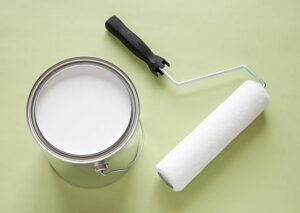
Matching white paint is surprisingly difficult.
You would think white is white, but walk into a paint store and you’ll find out pretty quickly that there are hundreds of different whites. Even if you find the exact color, an old wall may still look different because the paint has faded, yellowed, collected dirt, or simply aged differently than the new paint.
If you’re trying to touch up a wall, the goal isn’t necessarily to find a paint that looks white. The goal is to find a paint that looks like the white already on your wall.
There are a few ways to go about this, and I’ll show you what I normally do.
Before cutting pieces out of your wall or bringing paint chips to the store, check whether you already know what paint was used.
Look around your house for leftover paint cans. If you bought the house recently, ask the previous owner if they left any paint behind. You may also find paint information in a folder with your home’s construction or remodeling documents.
If you have the original paint, check the brand, color, and sheen. The sheen is important. A gallon of the correct white in eggshell will still look noticeably different from the same color in semi-gloss.
If you find an old can of paint that appears to be the correct color, don’t assume it’s still good just because the label matches. Paint can change as it ages, especially if it has been sitting in a garage for several years. I would always recommend saving an empty or extra can of any paint you use in your home for future reference, but I would also advise not to use one of those old cans for anything other than touch-up.
White paint has two primary characteristics, color (or shade) and sheen. You have almost no chance of determining the shade of white without references because there are simply too many similar colors. The sheen however can be figured out before you leave your house..
Look at the wall from an angle under a bright light. Flat paint has very little reflection. Eggshell has a small amount of sheen. Satin is noticeably shinier, and semi-gloss and gloss are much more reflective.
If you match the color perfectly but use the wrong sheen, your repair can still stick out like a sore thumb. I see this fairly often with trim and doors. Someone finds a white that looks right and paints it on, only to discover that the new paint reflects light differently from the old paint.
Determine the sheen you are working with first.
If you don’t know the original color, start by comparing paint samples to the wall.
Don’t hold a bunch of white paint samples up and try to decide which one looks best from across the room. Put the samples directly against the existing paint and look at them in the same lighting the wall normally receives.
You may notice that your “white” wall is actually slightly warm, cool, gray, yellow, or even beige. Natural light will change the way the paint looks throughout the day, so don’t be surprised if a color that looks perfect in the afternoon looks slightly different at night.
If you find a color that looks extremely close, buy a small sample rather than immediately buying a gallon and never buy paint before checking paint samples against your wall. Your eyes do deceive you and even a minor difference in shade will look like a blotchy mis-matched mess at the end of the day.
If you don’t know the original paint color, and don’t want to bother with trips back and forth from the paint store it is possible to scan your wall and cut out the trial and error. There are hand held paint scanners that can be bought on amazon, or you can take a piece of your wall directly to the paint store.
The important part is bringing an actual piece of the painted wall, not just a picture. A color scanner can analyze the sample and provide a formula for a paint that should be very close to the original.
If you’re taking a sample from the wall, be smart about it and don’t simply cut a hole out of your wall. Take a sample from a utility closet baseboard, or better yet find a removable fixture such as a light switch cover that has been painted so you can scan your wall without damaging it.
This method of removing a piece of the wall makes the most sense when you are repairing a hole in already damaged drywall. Simply save a piece of the wall and cut out the guess work.
This is where things get annoying.
Even if you buy the perfect paint match there may still be a noticeable difference. The original paint may have been on the wall for years. It has been exposed to sunlight, dust, cooking, smoke, cleaning products, and everything else that happens inside a house. The new paint hasn’t.
This means that an exact match to the original color isn’t necessarily an exact match to the current color of the wall. If the wall is old, I would rather have a close match to what is currently on the wall than blindly reproduce the color from ten years ago.
Color splotches and paint scanners are especially useful if you are not particularly keen on repainting the entire wall.
Once you have what you believe is a match, test it.
Put a small amount on the wall and let it dry completely. Don’t judge the paint while it is wet. Wet paint can look different from the finished color.
Once it’s dry, look at it from several angles. It will be a judgment call on your end of whether the color is close enough or not.
Sometimes you simply aren’t going to get a perfect match.
If the wall is old, faded, or has been painted several times, there may not be a paint color on the shelf that matches it perfectly. When that happens, I prefer painting the entire wall from corner to corner.
This gives you one uniform layer of paint rather than trying to blend a new color into an old one. Even if you are not painting the entire house it is easier to hide different color paint from one wall to the next rather than on a single flat surface because of the natural shadows of the room. If you really can’t get it to match then you should just accept your new accent wall and move on.
If you don’t want to rely entirely on color samples, you can take a small physical chip of paint from the wall.
I prefer this over trying to match the color by eye because the scanner has something physical to analyze.
Use a utility knife to carefully score a small square in an inconspicuous location. Try to remove the paint without taking a huge chunk of drywall paper with it.
You can then bring the chip to the paint store for matching.
Afterward, repair the small area where you removed the sample.
The biggest thing I would emphasize is don’t assume that matching the color means matching the paint.
Color is only one part of the equation. Sheen, age, lighting, and the condition of the existing wall can all affect how the finished repair looks.
If you know the original paint color, use it. If you don’t, I would rather have the paint scanned than spend an hour staring at fifty different shades of white trying to decide which one looks right.
I also recommend checking for leftover paint before doing anything else. You might get lucky and find a half-used gallon sitting in the garage. Just make sure it is still usable and test it before putting it on the wall.
When you’re matching white paint, test before committing. A small sample of paint is cheapish. A gallon of the wrong paint is considerably less cheap.
Another thing I pay attention to is the sheen. If you’re repairing a glossy surface, don’t expect a flat or eggshell paint to blend in just because the color is right.
Finally, if the wall is old and the touch-up still stands out after you’ve matched the color as closely as possible, don’t keep chasing paint colors. Paint the entire wall.
My preferred method is to find the original paint whenever possible. If I can’t, I’ll have a physical sample of the existing wall scanned, match the sheen, test the paint after it dries, and then decide whether a touch-up is good enough or the entire wall needs to be painted.
White paint doesn’t have to be complicated, but it does require a little more attention than most people expect. The closer you can match the existing color, sheen, and condition of the wall, the better chance you have of making the repair disappear.