Physical Address
304 North Cardinal St.
Dorchester Center, MA 02124
Physical Address
304 North Cardinal St.
Dorchester Center, MA 02124

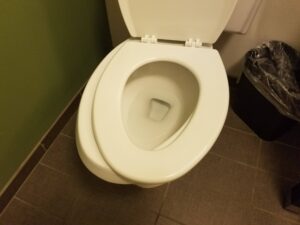
A loose toilet seat is usually a pretty simple repair. The problem is that not every toilet seat is mounted the same way, and tightening the obvious screw doesn’t always fix the problem.
The first thing I do is figure out what is actually moving. If the mounting hardware is loose, tighten it. If the hardware is tight but the seat still moves, the hinge or mounting hardware may be worn out. And if the entire toilet is moving, you’re working on the wrong problem.
Here’s how I would approach it.
Before grabbing any tools, I want you to look under the toilet seat and look for the little space dots. These are called “Toilet Seat Bumpers” and if one has fallen off or gone missing it could be your entire problem.
This is an often overlooked quick fix for a wobbly toilet seat. If all bumpers are still firmly in place then go ahead and move onto looking at the hinges.
If the hinges are moving where they attach to the toilet, the mounting hardware is probably loose.
If the mounting hardware isn’t moving but the seat itself has play at the hinge, the hinge may be worn or damaged.
Also make sure the toilet itself isn’t moving. Push gently on the bowl. If the entire toilet rocks against the floor, tightening the seat isn’t going to fix it.
That’s a different repair.
→ [How to Fix a Wobbly Toilet]
Put the seat where you want it before tightening anything.
Look at the gap between the seat and the sides of the bowl. Make sure it is centered and sitting straight.
I do this first because once you tighten the hardware, you’re basically locking the seat in that position. There isn’t much point tightening it if it’s it crooked.
Look at the hinges where the seat attaches to the toilet. Most toilets have screw covers. Reach back and try to pop up the screw cover to expose the actual hardware.
There are two common arrangements.
Bottom-mount seats have a bolt that passes through the toilet with a nut underneath the bowl.
Top-mount seats use hardware that can be tightened from above. These are particularly useful when there isn’t enough room to reach underneath the toilet, or the specific toilet design requires it.
There are also quick-release and concealed mounting systems. I usually only see these in custom homes. If your seat doesn’t look like either of these, don’t start forcing things apart. Identify the mounting system first.
If you have a nut underneath the toilet, hold the nut with your fingers, pliers, or a wrench while turning the screw from above. These screws and nuts are often times plastic so be gentle.
Tighten one side a little at a time while switching sides. This will force the toilet seat down straight and even. Once the seat is snug, stop.
Do not keep tightening. This is plastic hardware, it would love to strip out.
If your screw turns freely or will not tighten then it is likely that you have already stripped the nut and now you need to replace the hardware.
→ [How to Change a Toilet Seat]
If there isn’t a nut underneath the bowl, your seat may use top-mount hardware.
Open the hinge covers and find the screws or fasteners. If there are no visible hinge covers then you may have a quick release toilet seat. There will either be a push button on the back of the toilet seat somewhere to release it, or it may be one that you just pop into place. Either push the button or pop it off if this is the seat you have.
Now that the screws are exposed try tightening them down slowly.
If the screws spin freely or they won’t tighten, the anchor underneath may not be gripping properly, or the mounting hardware may be damaged. If this is the case then you will have to replace he toilet seat.
→ [How to Change a Toilet Seat]
Close the seat and move it gently from side to side.
Then sit on it normally.
If it stays centered and doesn’t shift, you’re done.
If it still moves and you have already snugged up the bolts then its likely that the mounting hardware is worn out and needs to be replaced..
If you have a bottom mounted seat, try holding the nut underneath the toilet rim. If you are holding the nut and the screw still spins then it is stripped and needs to be replaced
With a top-mount seat, a spinning screw can mean the anchor or expansion mechanism isn’t gripping properly. If that is your situation then you may need to replace the hardware.
→ [How to Change a Toilet Seat]
If you are missing toilet seat bumpers then your toilet seat will rock. Installing hardware with a missing bumper is a waste of money because you will ruin the new mounting system the next time you use the toilet.
This is probably the easiest mistake to make.
Tighten the seat until it is secure, then stop. Toilet-seat manufacturers specifically warn against overtightening because the hardware is usually cheap plastic.
If the bolt and nut are both turning, you’re not actually tightening anything.
This can pull the seat out of alignment.
I tighten both sides gradually and check the position as I go. you should do the same
They don’t.
Bottom-mount, top-mount, concealed, and quick-release seats can use completely different fastening systems. Luckily none are particularly complicated once you know where the mounting hardware is.
If the entire toilet rocks when you sit down, stop working on the seat.
You’ve got a wobbly toilet, not a loose toilet seat.
→ [How to Fix a Wobbly Toilet]
I don’t start by reaching for the screwdriver. I start by moving the seat and watching the hinges. Five seconds of figuring out what is actually moving can save you time and money.
I also prefer making small adjustments. Tighten one side, check the seat, then tighten the other. There is no prize for getting the job done in one turn of the screwdriver.
If a toilet seat keeps coming loose after you’ve tightened it properly, stop tightening it. That’s usually telling you something. The hardware may be worn, the hinge may be damaged, or the mounting system may not be holding correctly.
And if the whole toilet moves when you sit down, don’t blame the seat. You’ve got a different problem.
The goal is simple: the seat should stay centered, stay attached, and not move when you use it.