Physical Address
304 North Cardinal St.
Dorchester Center, MA 02124
Physical Address
304 North Cardinal St.
Dorchester Center, MA 02124

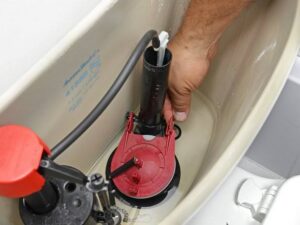
If your toilet won’t stop running, makes a faint trickling sound, or seems to refill itself when left alone, there is a good chance the flapper is leaking.
Replacing a toilet flapper is one of the easier plumbing repairs you can do. The actual replacement only takes a few minutes. The important part is making sure the flapper is actually the problem and getting the new one adjusted correctly.
If you are unsure if your flapper is the problem you can follow the guide below to double check.
Your toilet flapper will most likely either be a 2 inch flapper if it is an older toilet, or a 3 inch flapper on more recent toilets.
You can either measure your flapper before heading to the hardware store or, what I prefer, bring the flapper to the store with you.
Bringing parts to the hardware store is, in my opinion, the best way to get the right part the first time.
Before replacing anything you will want to be sure that the flapper is actually the problem.
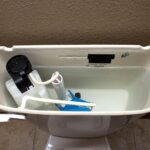
Take the lid off the tank and watch the water level. If water is slowly leaking from the tank into the bowl, then it is most definitely the flapper.
You can also put a few drops of food coloring in the tank and wait about 10 minutes without flushing. If colored water shows up in the bowl, water is getting past the seal and again it is definitely the flapper.
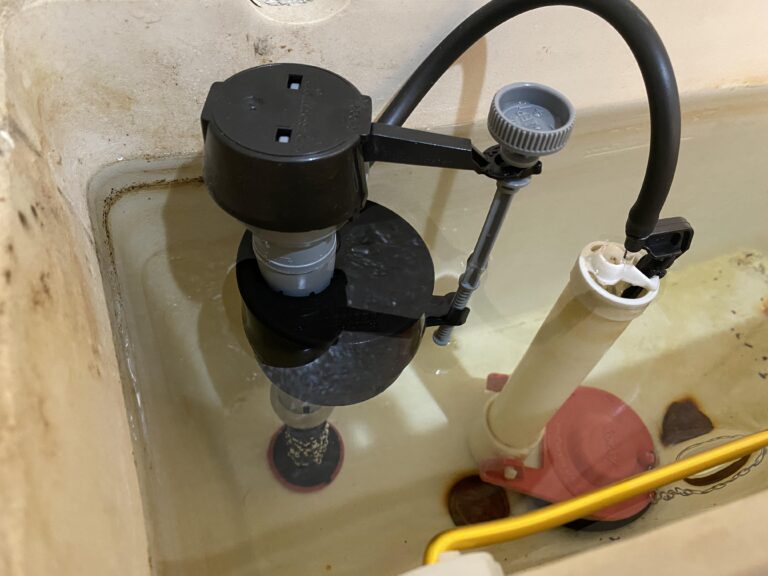
If water is running into the overflow tube because the tank is filling too high, then you have a different problem. That’s more likely a fill-valve or water-level issue.
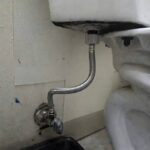
Turn the shutoff valve behind the toilet clockwise to shut off the water.
Flush the toilet and hold the handle down until most of the water leaves the tank. You don’t need to get every drop out, but getting the water level low makes the flapper much easier to work on.
The valve will most likely be a bit stiff, but if it is stuck don’t force it. If you break the shut off valve then you will be in a word of trouble.
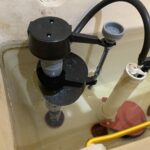
If the shutoff valve is stuck you can still replace your flapper. The fill valve is controlled by the float in your toilet. So all you have to do is find a way to hold the float up so the fill valve remains in the closed position. This will stop the tank from filling and you will be able to replace the flapper.
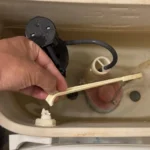
Disconnect the chain from the flush lever. Your new flapper should come with its own chain.
Most standard flappers can simply be popped in and out of place from their hinges on the overflow valve. Be careful because these are just plastic and your don’t want to break the mounting bar on the overflow tube.
Before throwing the old flapper away, compare it with the new one. Make sure the size and mounting arrangement are actually the same if you haven’t done so already.
Take a look at the surface underneath the flapper.
The rubber flapper needs to sit against a clean, reasonably smooth surface. Mineral buildup, dirt, or damage can keep a brand-new flapper from sealing.
If there is some buildup, clean it off carefully with an old rag.
Attach the new flapper to the mounting tabs and make sure it sits flat over the opening.
Reconnect the chain to the flush lever.
You want a little slack in the chain. About 1/2 inch is what I usually shoot for, but play with your toilet handle and make sure it feels the same as before. This will be your best indicator.
If the chain is too tight, it can hold the flapper slightly open and cause the toilet to run. If it is too loose, the handle may not lift the flapper properly, and the excess chain can get caught underneath it.
Slowly open the shutoff valve and let the tank fill.
Watch the flapper close and make sure the fill valve shuts off when the tank reaches the proper level. Then flush the toilet several times.
If you still hear water running then you likely need to readjust the chain.
Check the chain adjustment, make sure the flapper is centered, and inspect the sealing surface again. If water is still getting into the bowl, you may have the wrong flapper or a damaged flush valve.
If the toilet is filling past the overflow tube, look at the fill valve instead.