Physical Address
304 North Cardinal St.
Dorchester Center, MA 02124
Physical Address
304 North Cardinal St.
Dorchester Center, MA 02124

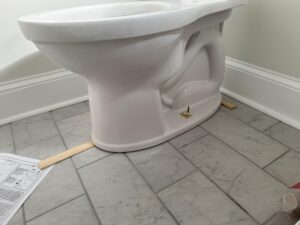
A toilet that rocks when you sit on it usually isn’t a complicated repair. The trick is figuring out why it is rocking before you start wrenching.
A wobbly toilet can have loose mounting bolts, an uneven floor, a damaged toilet flange, or a problem with the seal underneath it. Those problems can feel almost identical when you’re sitting on the toilet, but they don’t all get fixed the same way.
The first thing I do is push on the bowl and figure out what is actually moving. If the bolts are loose, tighten them. If the toilet is sitting on an uneven floor, shim it. If the bolts won’t hold, start looking underneath the toilet.
Despite what you may first think, a wobbly toilet is not a minor issue that can be overlooked. If a toilet is moving under you then it means it is also moving around on the seal and it is only a matter of time before that seal gets damaged. A damaged wax seal is the quickest way to fill your bathroom with smelly sewage water.
Take the two bolt covers off of the base of the toilet so you can watch them.
Before tightening anything, gently rock the toilet bowl from side to side.
The toilet is normally secured to the floor flange with mounting hardware on either side of the base. If the nuts have loosened, the toilet can move.
You will be able to see this because the toilet will move around while the bolts don’t. These mounting bolts should be securely fastened and should not have any wiggle room.
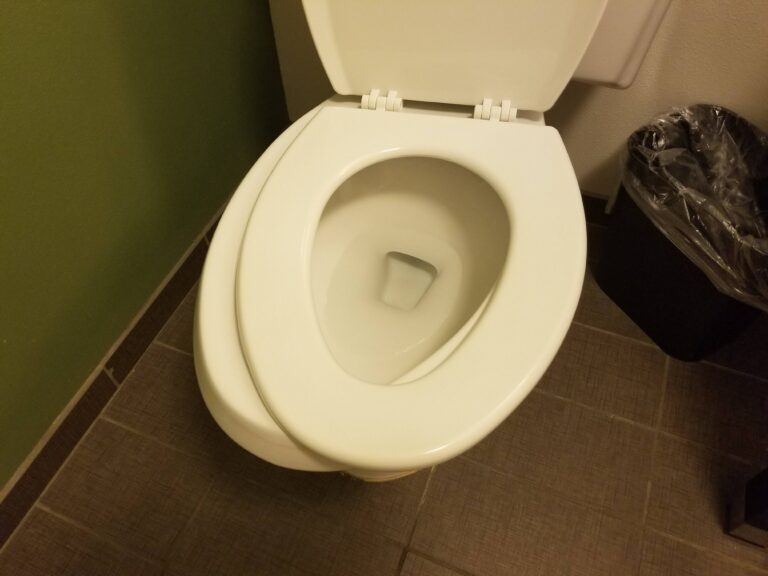
Sometimes the toilet is attached properly but doesn’t sit flat on the finished floor.
You’ll usually find a small gap underneath part of the base. rock the toilet side to side and see if that is what is causing the problem.
The flange is the mounting point underneath the toilet. The bolts attach to it, so it needs to be solidly attached to the floor.
If a mounting bolt spins without tightening, the flange may be damaged. If the toilet can move drastically and the bolts are firmly attached, that means that your flange has broken off from the drain.
If you have a broken flange you have a much larger problem and will have to remove the toilet.
A toilet that has been rocking for a long time can eventually cause problems with the seal underneath it.
Look for water around the base, staining, a sewer smell, or flooring that feels soft or damaged.
If you find any of those things, you will have to remove the toilet to fix it.
Look at the base of the toilet on either side. There will usually be a small plastic cap covering each mounting nut.
Pop the caps off and check the nuts. If they’re obviously loose, you may have found the entire problem.
This is always my first step. Put a wrench on the nuts and see if you can snug them up at all. They don’t need to be very tight, it is mainly the weight of the toilet that holds it down, the bolts are only there to position the toilet on the flange.
If the bolts turn when you are trying to tighten the nuts then you either have a damaged flange or the bolt has come loose out of the flange somehow, either way you will have to remove the toilet for this fix.
If the mounting bolts are secure, look underneath the base.
You may find that part of the toilet is sitting firmly on the floor while another section has a small gap. Push gently on the toilet from different directions and watch where the gap opens and closes.
If the toilet is secure and the flange is in good condition, this is a good time for shimming.
I prefer plastic toilet shims for this. They’re inexpensive, they don’t rot, and they’re made for this exact problem. The plastic shims have the advantage of being easily cut with a utility knife so the excess can be removed and the toilet doesn’t look like it was shimmed. Caulking can also help to hide the shim.
Slide a shim into the gap underneath the toilet by hand. The goal is to fill the gap enough to stop the movement. You do not want to lift the toilet. lifting the toilet lifts it off of the seal and can cause your wax seal to leak.
Once the shim is in place, push on the toilet again. If it still rocks, you may need another shim in a different location. Make small adjustments and test the toilet after each one.
If one side of the toilet is sitting high because the floor is uneven, tightening the mounting nuts harder doesn’t make the floor flat. It just puts more stress on the porcelain.
The shim is there to support the toilet where the floor doesn’t.
If you’ve tightened the mounting hardware and properly shimmed the toilet and it still moves, your problem is the floor.
Like I said before, it is the weight of the toilet that holds it down, not the mounting bolts. So if your toilet is shimmed properly and still wobbles then it is most likely the floor that the toilet sits on.
Step next to the toilet and apply weight to the floor around your toilet. Do you feel the floor giving under you weight at all. If so then it is likely that you have a semi rotted sub floor and the toilet will keep rocking until you fix this issue.
If you have tile floor that does not flex under weight at all then it is most likely that you improperly shimmed the toilet.
A wobbly toilet is the quickest way to ruin your toilet flange and seal. Even if you tightened the bolts and shimmed the toilet perfectly, it is possible that the toilet is no longer sitting on the seal correctly anymore.
Carefully watch the toilet when you use it for several days.
If you notice any bad smells or subfloor rotting around the toilet then it is highly likely that either your flange or wax seal has gone bad. For this you are going to need to follow one of my other guides to
→ [How to Replace Wax Ring on Toilet]
→ [How to Replace Toilet Flange]
If your toilet is leaking around the base then I would bet money that you have a bad wax seal. At this point it is too late to simply tighten or shim the toilet. You need to lift the toilet and change the seal and/or the flange.
If the toilet is still rocking after the nuts are snug, stop.
If you continue to tighten the bolts and the toilet is on an uneven surface then you may end up breaking the flange or pulling the bolts out of the flange. Both of which require you to lift the toilet to fix.
I have talked about the opposite a lot, but if the toilet is secure, the flange is sound, and the seal hasn’t been disturbed, a small gap may only require shimming.
I’ve seen pieces of wood and other improvised materials used to stop toilets from rocking.
Use purpose-made plastic toilet shims. They’re cheap, easy to trim, and don’t turn into another problem later.
A wobbly toilet with a dry floor is one thing.
A wobbly toilet with water underneath it is something else.
Don’t ever cover up a leak with a shim.
If the toilet comes off, have the replacement seal ready.
Every time, I don’t care how new the seal was, I don’t care if you just wanted to take a look at the new seal you installed. If the toilet leaves the seal, replace it, every time.
I would stop and get professional help if:
A loose toilet sitting on an uneven floor is a reasonable DIY repair.
A toilet sitting on a damaged floor with a broken flange and a leaking seal is no longer a simple shimming job.
Know which problem you have before you start taking things apart.
The first thing I would emphasize is don’t assume the bolts are the problem just because the toilet is moving.
Push on the bowl and watch what happens. If the mounting hardware is loose, tighten it. If the hardware is tight but there is a gap under the toilet, shim it. If the hardware won’t hold, start looking at the flange.
That approach is usually faster than taking the toilet apart just because it moves.
I also prefer making small adjustments. Put one shim under the toilet, test it, and see what changed. Don’t immediately stack several shims underneath it and hope for the best.
If the toilet has been wobbly for a long time, I pay more attention to what’s underneath it. A toilet can move for months without anyone thinking much about it. If you finally notice water around the base, the problem may have already moved beyond the toilet itself.
If I have to remove the toilet, I inspect the flange before doing anything else. There isn’t much point in putting a toilet back on top of a problem you already know is there.
Finally, test the repair before putting the tools away. Sit on the toilet, push gently from several directions, flush it several times, and look around the base afterward.
I don’t care if the toilet is perfectly level to the nearest fraction of a degree.
I care that it is solid, properly supported, and not leaking.